


Why Is a Reaming Bit Essential for Precision Drilling Performance?
2026-05-21
In modern drilling operations—whether in mining, construction, tunneling, or geotechnical engineering—hole quality is just as important as drilling speed. A Reaming Bit plays a critical role in improving borehole accuracy, stabilizing hole diameter, and enhancing overall drilling efficiency. This article explores how reaming bits work, why they are essential in demanding drilling environments, and how they solve common industry pain points such as hole deviation, tool wear, and poor fragmentation. You will also find practical selection guidance, performance comparison tables, maintenance strategies, and real-world application insights designed to help operators, engineers, and procurement teams make informed decisions.
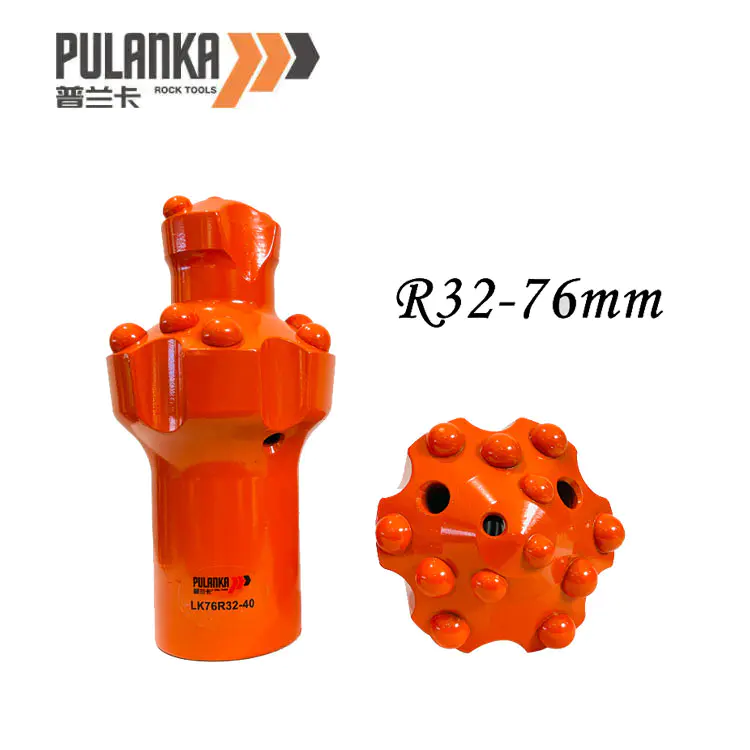
Table of Contents
- What Is a Reaming Bit?
- Why Reaming Bits Matter in Drilling Operations
- Key Applications Across Industries
- Structural Design and Working Principle
- Reaming Bit vs Conventional Drill Bit
- How to Choose the Right Reaming Bit
- Maintenance and Optimization Tips
- Common Challenges and Solutions
- Future Trends in Reaming Bit Technology
- FAQ
- Conclusion & Contact
What Is a Reaming Bit?
A Reaming Bit is a specialized drilling tool designed to enlarge, stabilize, and refine pre-drilled holes. Unlike standard drill bits that primarily focus on penetration, reaming bits focus on hole accuracy, smooth wall finishing, and diameter consistency. They are commonly used in rock drilling, mining blasting holes, water well drilling, and foundation engineering.
The core purpose of a reaming bit is not just to drill—but to correct and improve the borehole after initial penetration. This makes it a critical tool in environments where precision and structural integrity are non-negotiable.
Why Reaming Bits Matter in Drilling Operations
In real-world drilling environments, operators often face issues such as hole deviation, irregular diameter, bit wear, and inefficient cuttings removal. These problems lead to increased operational costs and reduced project efficiency. Reaming bits directly address these challenges.
- Improved Hole Accuracy: Ensures consistent diameter throughout the borehole.
- Reduced Tool Wear: Minimizes stress on primary drill bits.
- Better Explosive Loading: In mining, uniform holes improve blasting efficiency.
- Enhanced Stability: Prevents collapse in loose or fractured rock formations.
In short, reaming bits act as a finishing and stabilizing tool that transforms an average drilling process into a controlled engineering operation.
Key Applications Across Industries
Reaming bits are widely used across multiple industries where drilling precision is essential.
- Mining Industry: Used in blast hole enlargement and underground tunneling.
- Construction: Foundation piling and anchoring systems.
- Water Well Drilling: Ensures smooth casing installation.
- Geotechnical Engineering: Soil sampling and rock formation studies.
- Tunneling Projects: Maintains alignment and hole uniformity in long boreholes.
Each application requires different bit configurations depending on rock hardness, drilling depth, and project scale.
Structural Design and Working Principle
The design of a reaming bit is more complex than standard drill bits. It typically includes multiple cutting arms, tungsten carbide inserts, and reinforced alloy steel bodies.
Working Principle:
- The pilot bit initiates the drilling process.
- The reaming section enlarges the hole to required specifications.
- Cuttings are efficiently removed through flushing channels.
This dual-stage mechanism ensures that the borehole is not only created but also optimized for accuracy and stability.
| Component | Function |
|---|---|
| Cutting Inserts | Break and crush rock formations |
| Bit Body | Provides structural support |
| Flushing Channels | Remove debris and improve cooling |
| Gauge Protection | Maintains hole diameter consistency |
Reaming Bit vs Conventional Drill Bit
Understanding the difference between reaming bits and standard drill bits is essential for selecting the right tool.
| Feature | Reaming Bit | Standard Drill Bit |
|---|---|---|
| Primary Function | Enlarging and refining holes | Initial hole drilling |
| Precision | High | Moderate |
| Durability | Very high | Moderate |
| Use Stage | Secondary/Finishing | Primary drilling |
While both tools are essential, reaming bits are indispensable when precision and structural quality are required.
How to Choose the Right Reaming Bit
Selecting the correct reaming bit depends on several engineering and environmental factors. A poor selection can lead to inefficiency and equipment damage.
- Rock Hardness: Hard rock requires tungsten carbide reinforcement.
- Hole Diameter Requirement: Determines bit size and cutting structure.
- Drilling Depth: Deep drilling requires better flushing design.
- Machine Compatibility: Must match rig power and rotation speed.
- Wear Resistance: Essential for long-term cost efficiency.
Choosing the right configuration significantly improves drilling performance and reduces operational downtime.
Maintenance and Optimization Tips
Proper maintenance of reaming bits extends their lifespan and ensures stable performance.
- Regular inspection of cutting inserts for wear and cracks
- Proper cleaning after each drilling cycle
- Ensuring correct flushing pressure during operation
- Avoiding excessive rotational speed in hard formations
- Timely replacement of damaged components
Preventive maintenance is significantly more cost-effective than emergency replacements or downtime repairs.
Common Challenges and Solutions
Even with advanced design, reaming bits can face operational challenges in harsh environments.
- Bit Wear: Use high-grade carbide inserts.
- Hole Deviation: Improve drilling alignment and stabilizers.
- Blockage Issues: Enhance flushing system efficiency.
- Heat Build-up: Optimize lubrication and water flow.
Addressing these issues early ensures smoother operations and better project outcomes.
Future Trends in Reaming Bit Technology
The future of reaming bit technology is moving toward smarter, more durable, and more efficient designs. Innovations include:
- Advanced composite materials for extended lifespan
- AI-assisted drilling optimization systems
- Improved self-sharpening cutting structures
- Energy-efficient flushing systems
These developments aim to reduce operational costs while increasing precision and drilling speed.
FAQ
Q1: What is the main purpose of a reaming bit?
A reaming bit is used to enlarge and refine drilled holes to ensure accuracy and stability.
Q2: Can reaming bits be used for initial drilling?
They are generally not used for primary drilling but for secondary hole enlargement.
Q3: How long does a reaming bit last?
Lifespan depends on material quality, rock hardness, and maintenance practices.
Q4: What industries use reaming bits the most?
Mining, construction, tunneling, and geotechnical engineering industries rely heavily on them.
Conclusion & Contact
A Reaming Bit is far more than a simple drilling accessory—it is a precision engineering tool that ensures accuracy, efficiency, and structural integrity in demanding drilling environments. From mining operations to construction foundations, its role is indispensable in achieving high-quality boreholes and reducing operational risks.
By understanding its structure, applications, and maintenance requirements, operators can significantly improve drilling performance and reduce long-term costs.
For high-performance drilling solutions and professional-grade reaming bits, PULANKA ROCK TOOLS CO., LTD. provides reliable products engineered for durability and efficiency in the toughest working conditions.
Contact us today to learn more about our reaming bit solutions and get expert support tailored to your drilling needs.
Related News


E-mail:
elma@cnpulk.comAddress: No.4855 Shugang Avenue, Jingqing Town, Luqiao District, Taizhou City, Zhejiang Province, China
Tel: +86-576-82737372