


Pulanka PLC Rock Shanks Conquer Corrosive Wet Mining Environments
2026-06-30
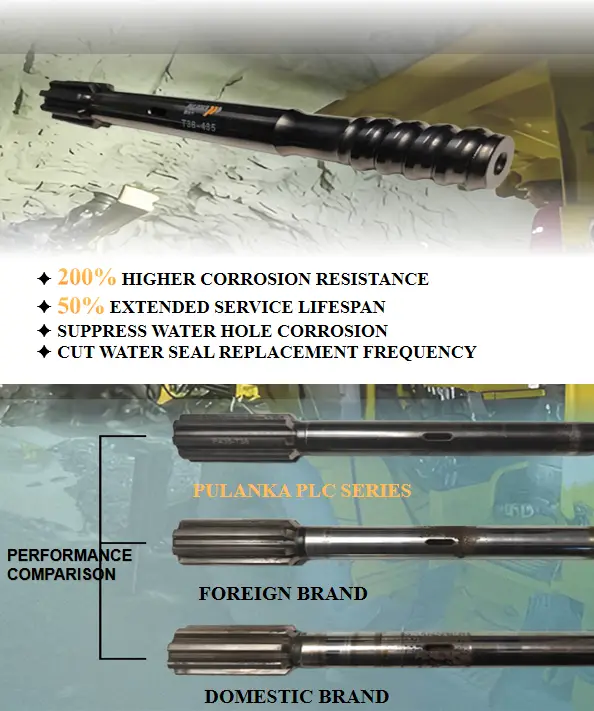
★ 200% HIGHER CORROSION RESISTANCE
★ 50% EXTENDED SERVICE LIFESPAN
★ SUPPRESS WATER HOLE CORROSION
★ CUT WATER SEAL REPLACEMENT FREQUENCY
Key Data of Iron Ore Drilling Operations
This application scenario focuses on 300m underground iron ore excavation. The mine has been stably operated for 10 years with mature geological conditions, yet the deep excavation environment remains harsh, placing high demands on equipment, tooling, and techniques. The tunnel is located at 300m depth, featuring hard rock, high abrasiveness, and strict drilling density and depth requirements. Detailed elaboration is provided from two aspects: rock/ore characteristics and tunnel/construction parameters.
Rock and Ore Characteristics
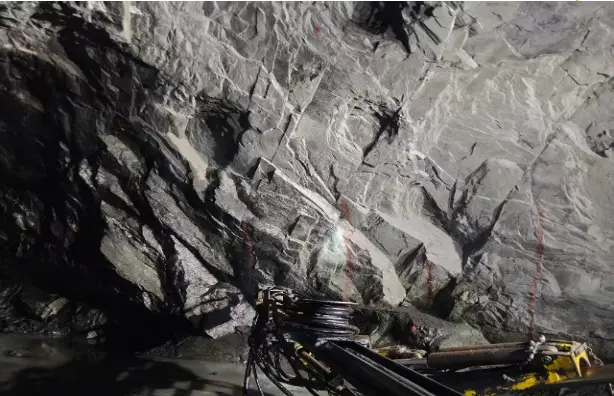
The excavation area features three high-hardness metamorphic rocks: quartzite, biotite granulite, and plagioclase amphibolite, which together form a dense, high-strength, highly wear-resistant rock system.
Tunnel & Construction Specifications
Located 300m underground, the tunnel features significant ground pressure, elevated rock temperature, and increased difficulty in ventilation and mucking.
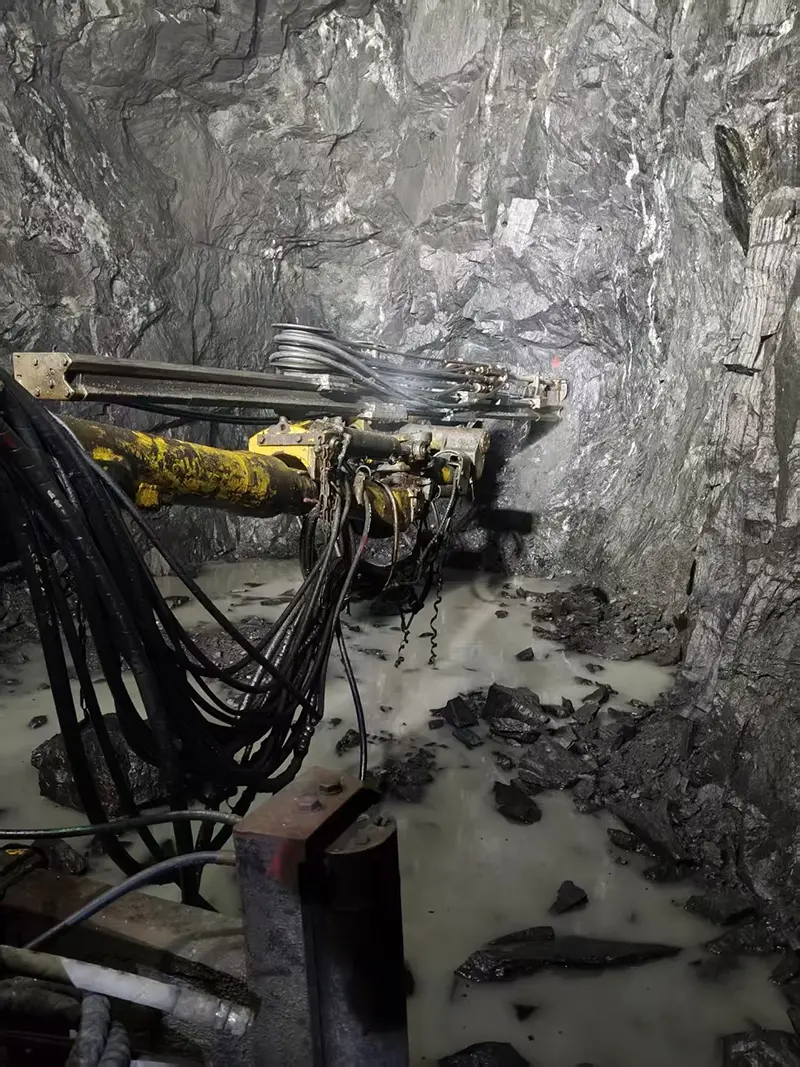
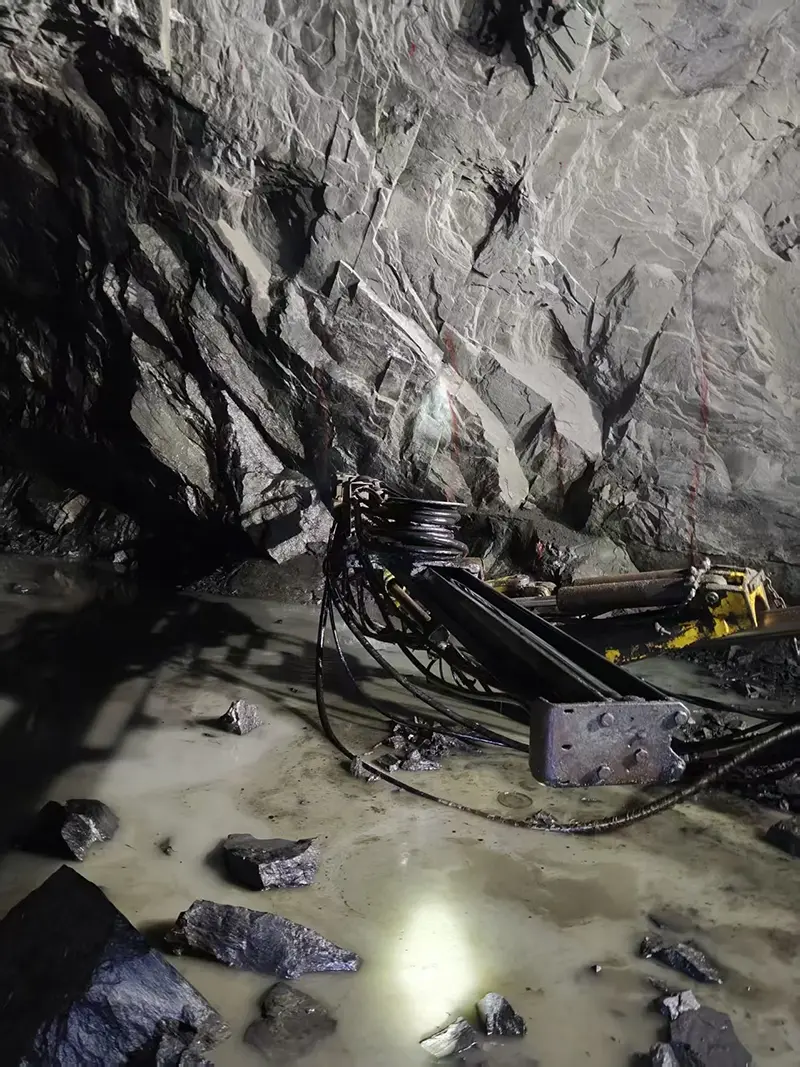
Quartzite, biotite granulite, and plagioclase amphibolite constitute a dense, high-strength, highly wear-resistant rock system.
The rock hardness coefficient is as high as F=14-16, a typical high-hardness, wear-resistant formation that demands high breaking energy and tool impact resistance, accelerating tool damage. Regarding ore structure, quartz and magnetite are distributed alternately. Magnetite, as the core component, features high hardness, strong magnetism, high density, and brittle fracture. Field tests show tool wear rate is 40%-60% higher than on ordinary iron ore, significantly reducing bit life per hole. High wear-resistant tool materials and coatings are therefore required.
The 5m×5m tunnel cross- section (25㎡ area) is designed as rectangular or straight-wall arched. A single excavation cycle requires drilling 70 blast holes.
In the tunnel 300 meters underground, there are 5 reaming holes of 89mm and 65 blast holes of 43mm. Based on a cross-sectional area of 25 square meters, the hole density of 70 holes is approximately 2.8 holes per square meter, far h i g h e r t h a n g e n e r a l m i n i n g e x c a v a t i o n standards. The high requirements for hole density and depth, combined with extremely hard and highly abrasive rock formations, pose severe challenges for drilling tools in terms of fatigue fracture resistance, flushing efficiency, thread connection strength, and carbide button retention.
Equipment Configuration
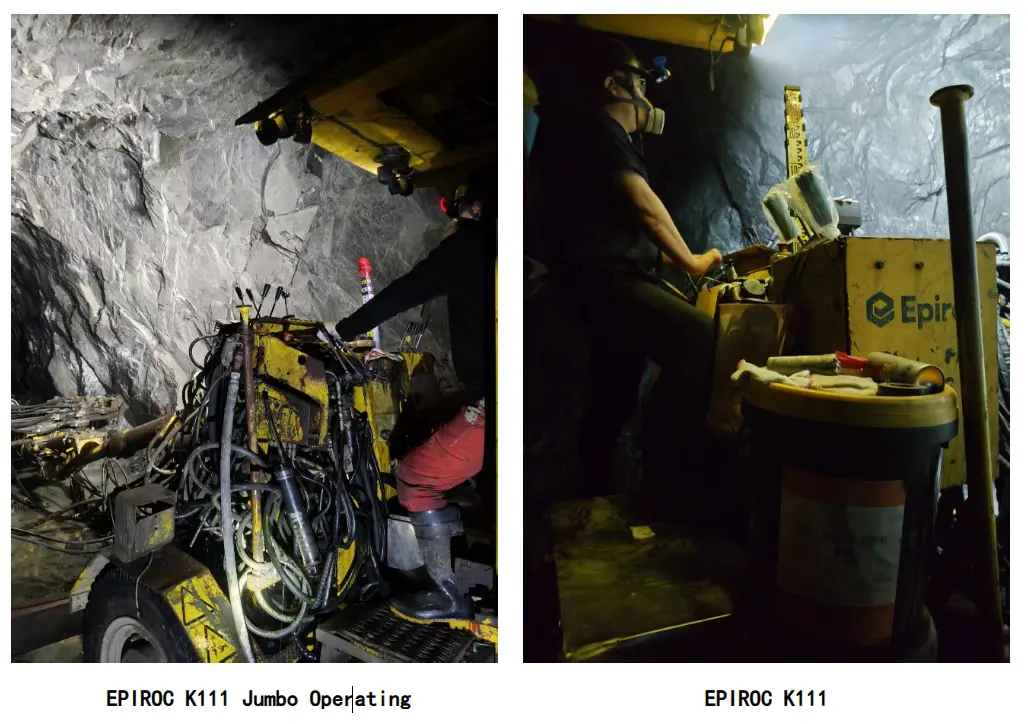
The construction equipment features the internationally renowned EPIROC K111
drilling jumbo with COP1838HD+ hydraulic rock drill. The matched tooling assembly
includes:
● Shank rod: COP1838-435-T38
● Drill rod: MF-T38-H35-R32 (4300mm)
● Drill bit: 43-R32
High equipment-tooling compatibility fully supports continuous high-strength
operation.
EPIROC K111 Jumbo Operating EPIROC K111
Each drilling jumbo completes blast hole drilling on two working faces daily. The
high load and long continuous operation demand extreme wear resistance, impact
resistance, and corrosion resistance from the shank rod.
FAQ
Q1: What shank rod brand was usedbefore, and under what conditions?
Answer: Given the extremely high rock hardness (F=14-16) and complex conditions, we have always used imported shank rods from world-renowned brands. The key need was stable operation in high-hardness rock.
Q2: What particular operational demandsdoes the mine place on the shank rod?
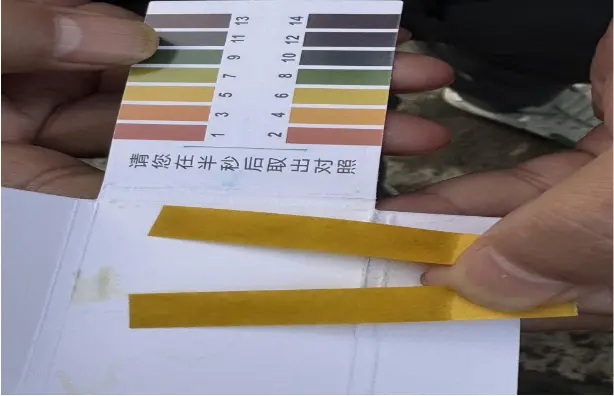
Answer: Besides wear and impact resistance for high-hardness rock, our mine's construction water is highly corrosive. So corrosion resistance is a critical requirement, and a pain point that previous imported shank rods couldn't fully solve.
Q3: What was the actual service life ofthe shank rod you've imported?
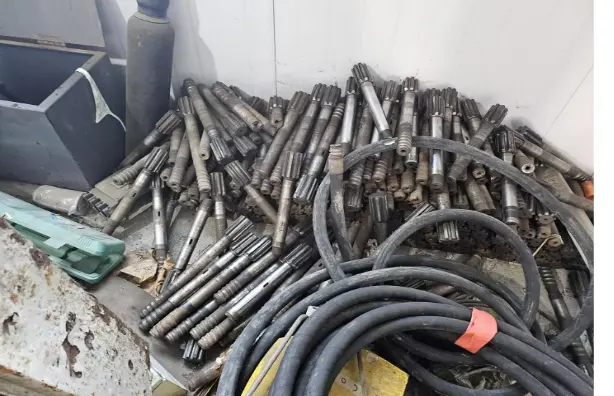
Answer: Under current conditions, the imported shank rod lasts only 7-8 working faces before failing from corrosion and wear. Frequent replacements reduce construction efficiency.
Q4: What improvements does the PLCsurface-reinforced shank rod bring?
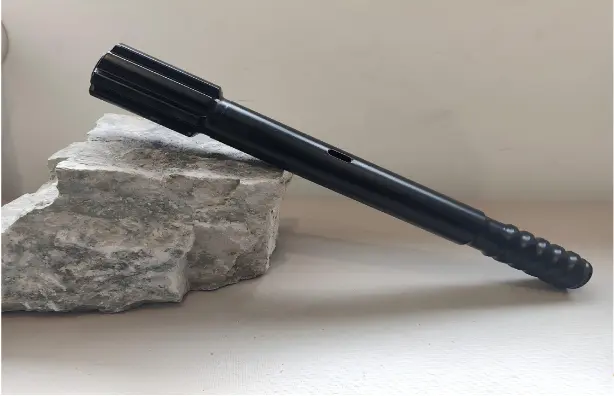
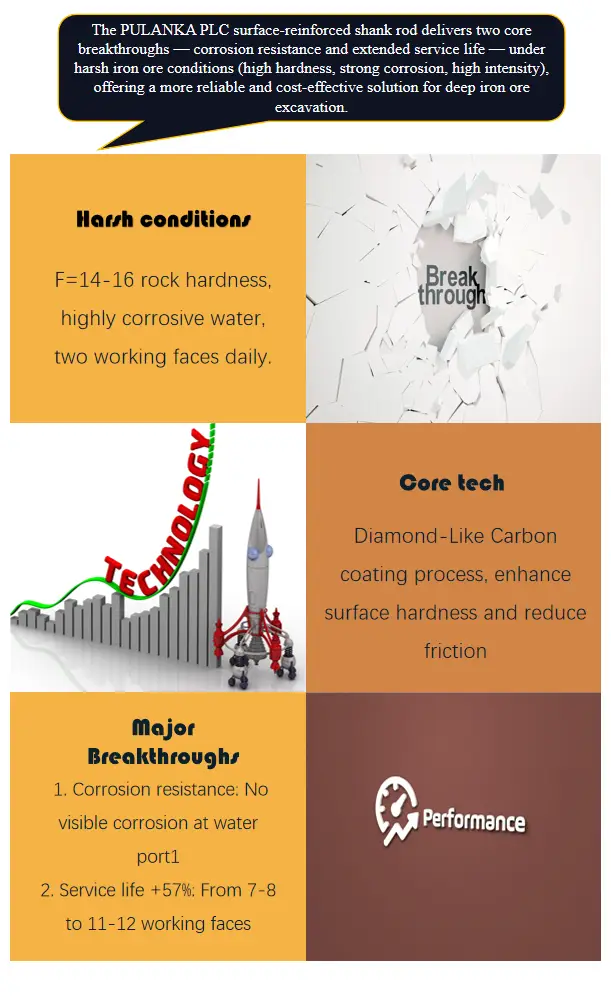
Answer: The biggest improvement is corrosion resistance — virtually no corrosion at the water port. Plus, service life is greatly extended, with each shank rod reliably lasting 11-12 working faces, well beyond expectations.
Q5: How do you rate theperformance gains of the PLCsurface-reinforced shank rod?
Answer: This PLC surface-reinforced shank rod has far outperformed imported products in our mine. It perfectly handles high-hardness rock and highly corrosive conditions with excellent stability. Nearby mines with similar conditions have also given outstanding feedback. We will continue supporting Planka's quality products and look forward to more drilling tools for complex applications.

PLC Surface-Reinforced Shank Rod: Revealing the Standout Features
Previous
Related News


E-mail:
elma@cnpulk.comAddress: No.4855 Shugang Avenue, Jingqing Town, Luqiao District, Taizhou City, Zhejiang Province, China
Tel: +86-576-82737372